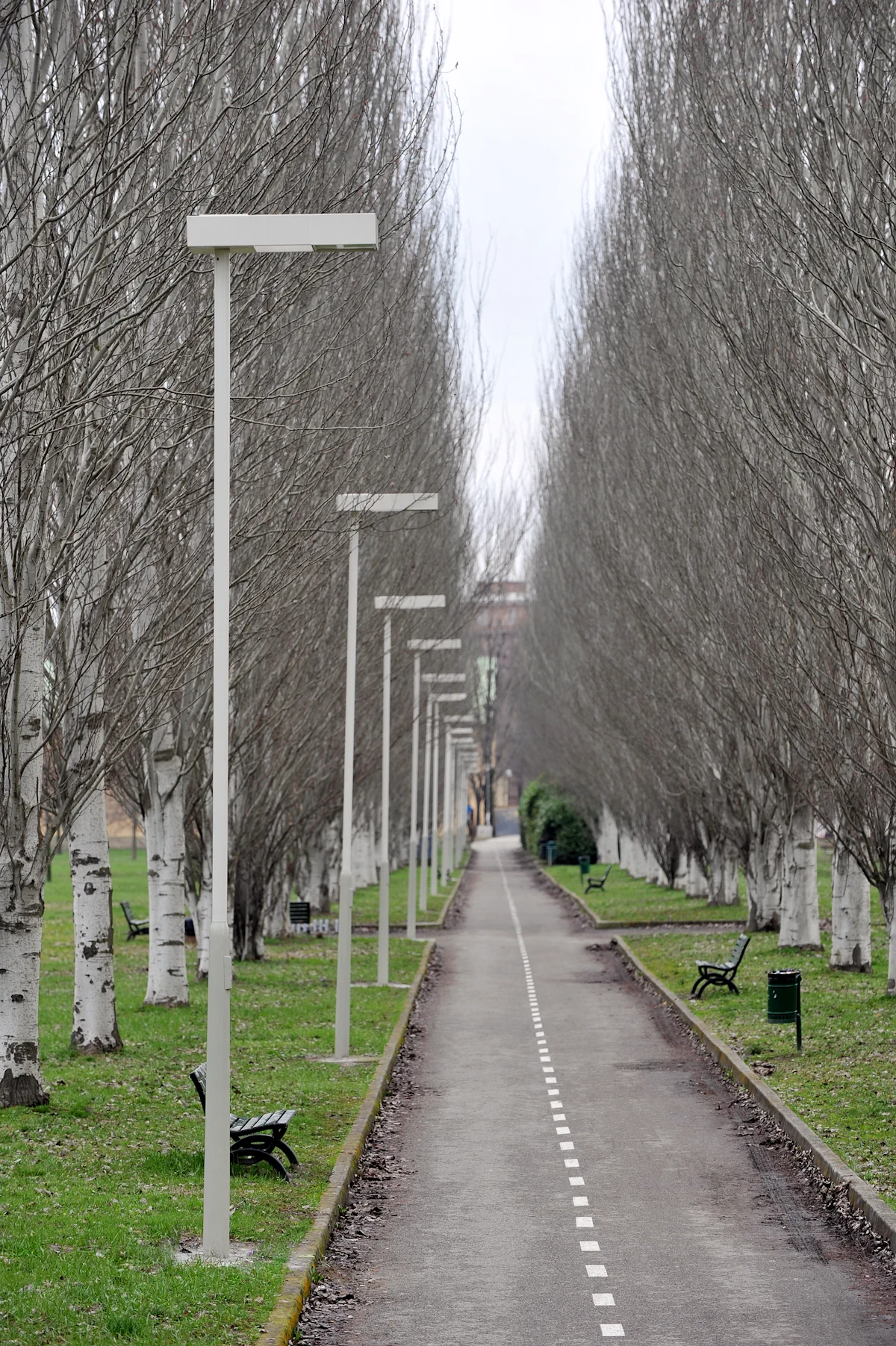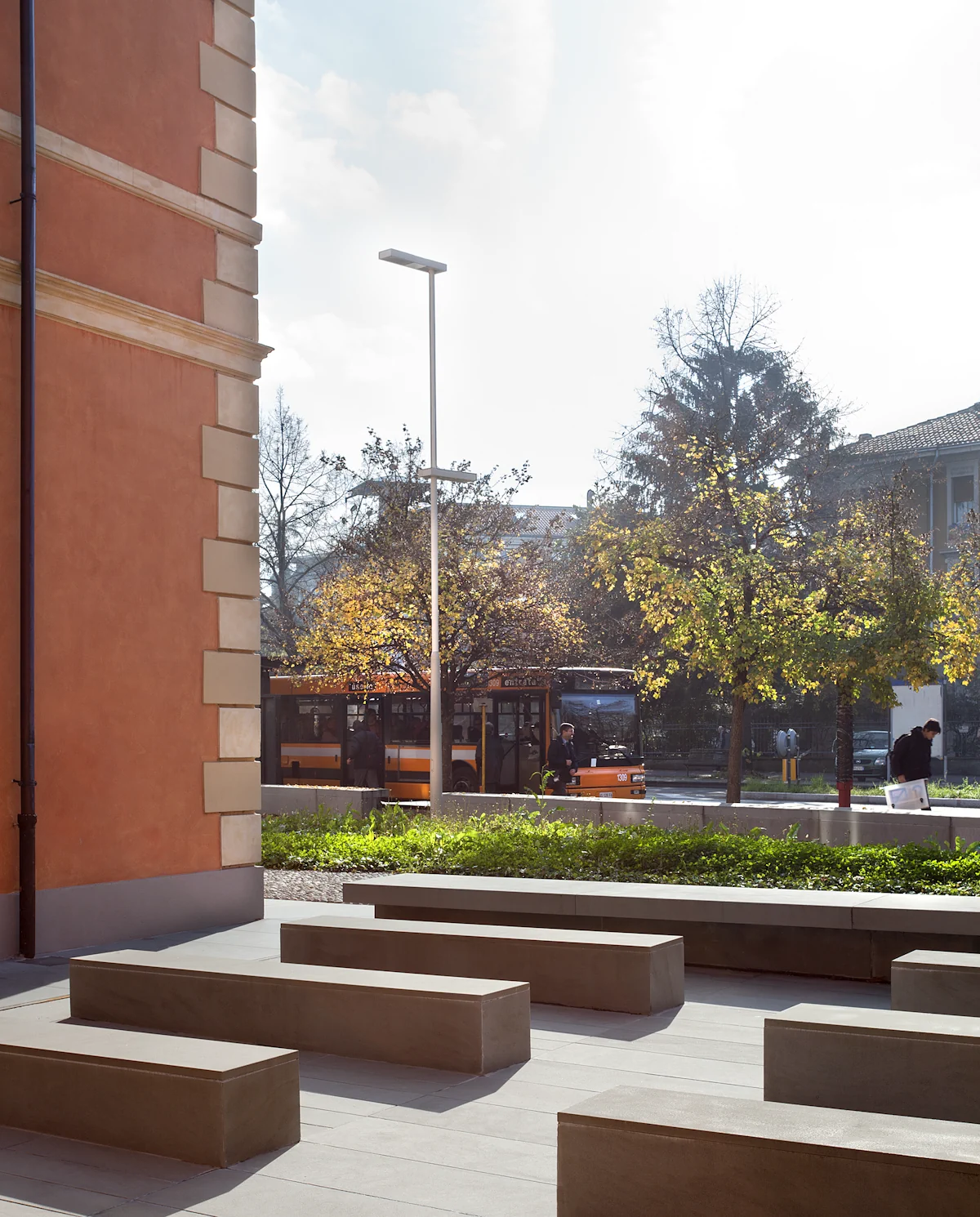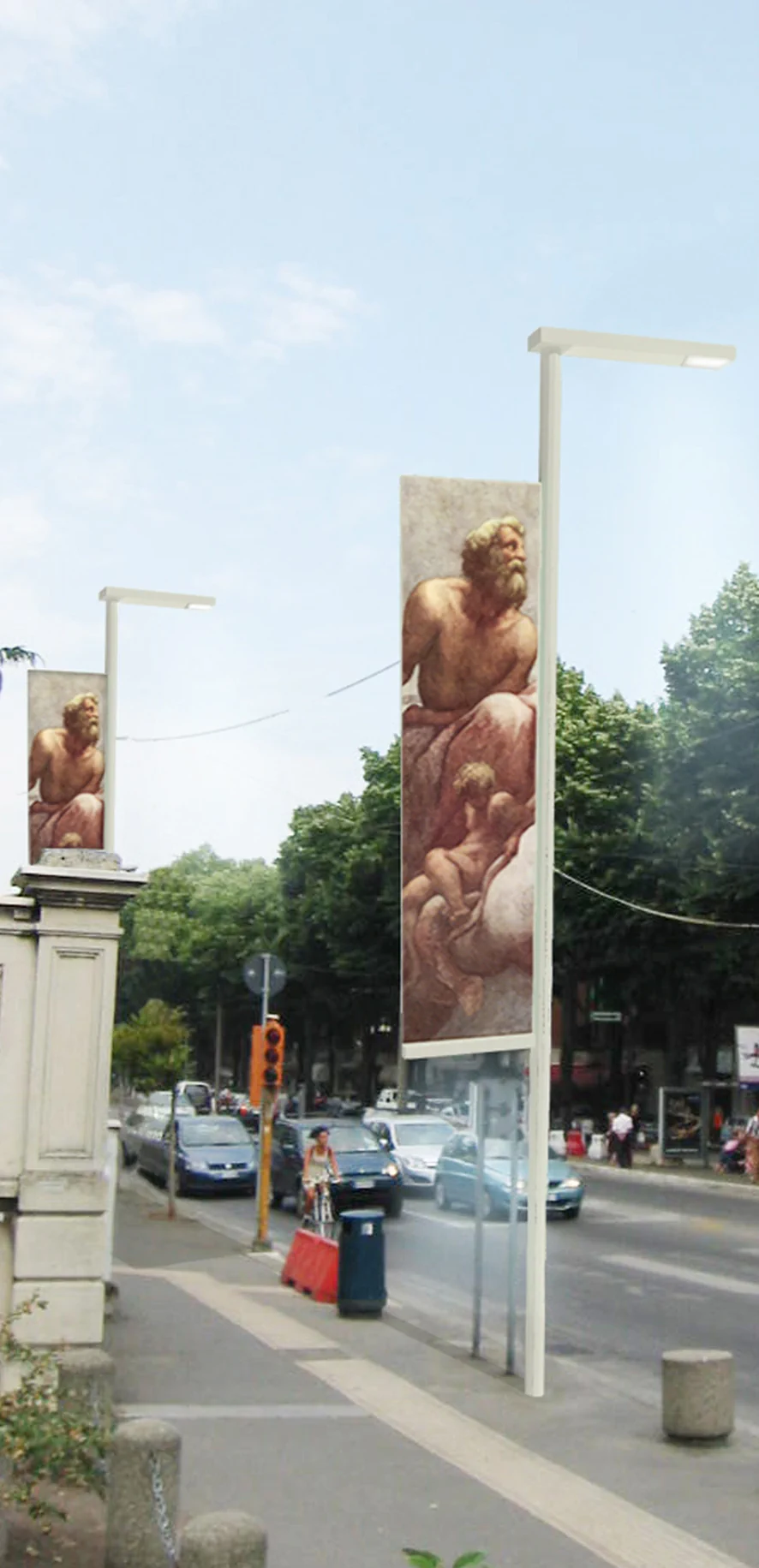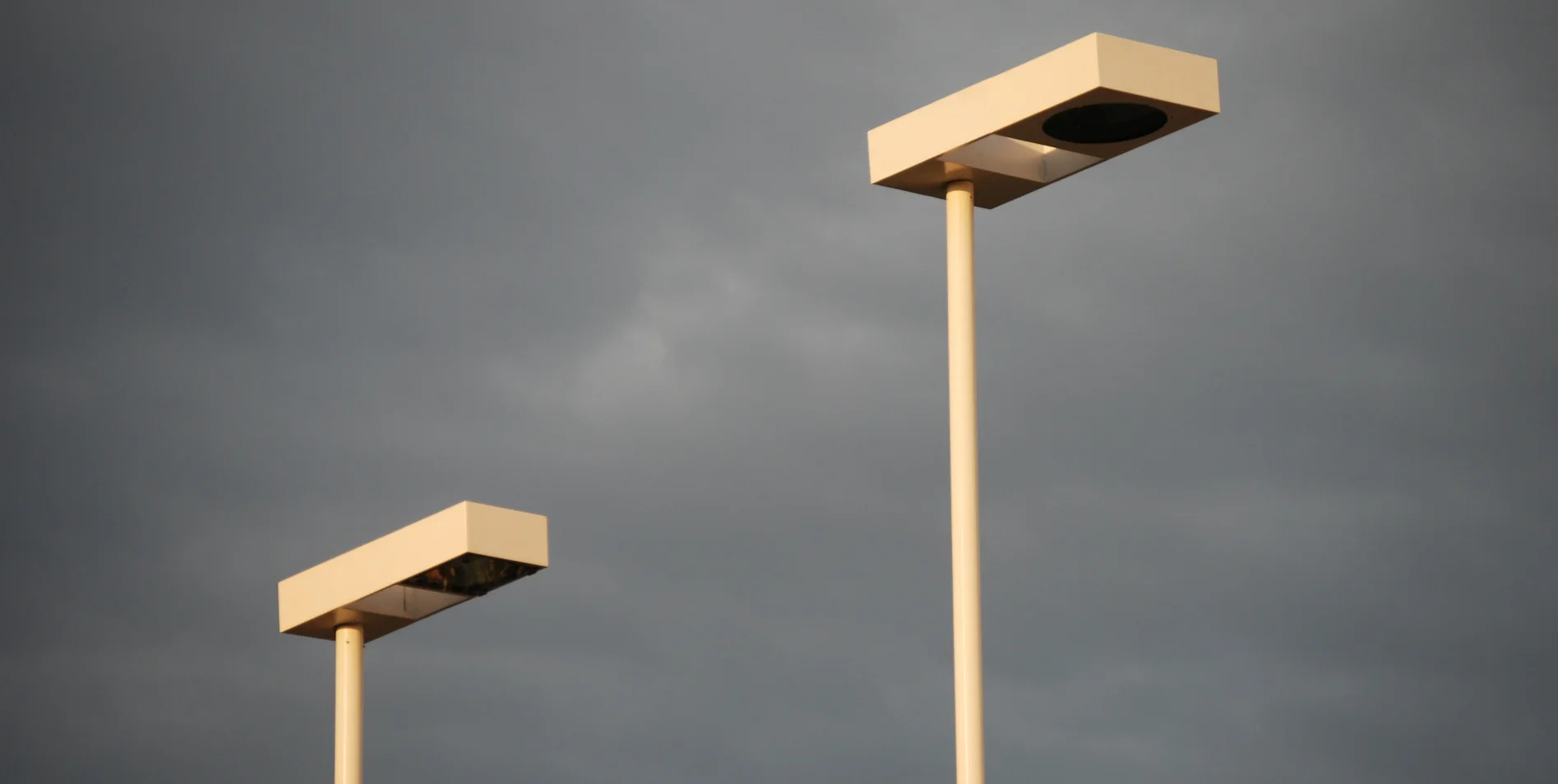
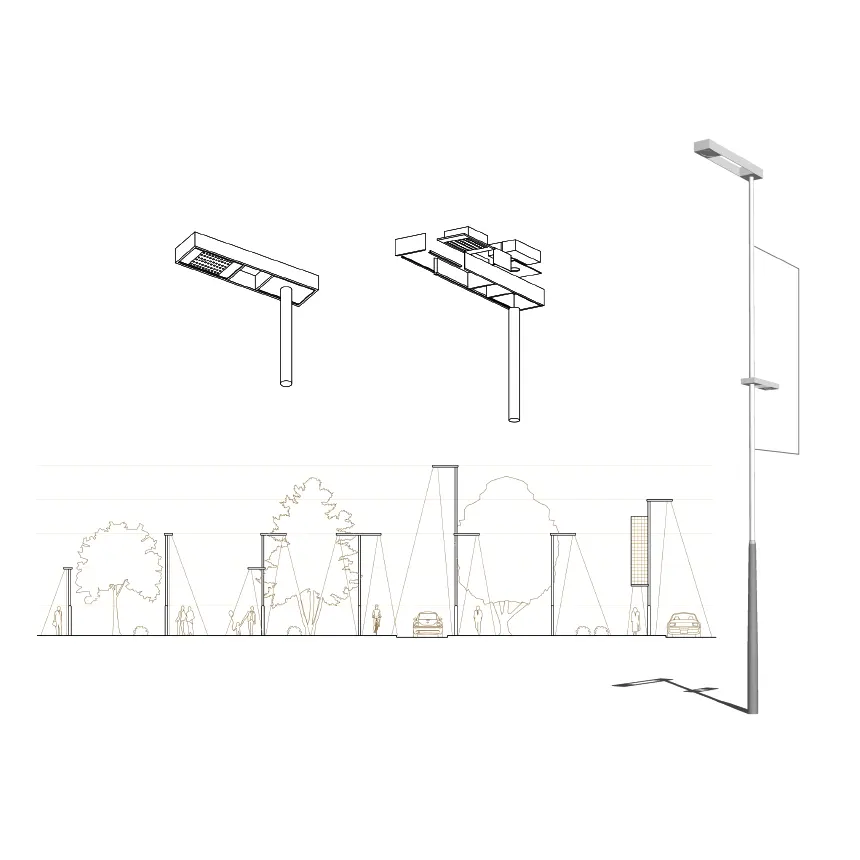
The design of a number of light poles is an experiment that radically rethinks the meaning of public lighting for cities. It does so first of all by recognising the urban role that each element plays and by drawing attention not so much to the bracing (pole head) as to the vertical extension of the pole. Starting from this premise, we examined a number of hypotheses in which the terminal part of the system was considered to be the conclusion of something that could be neither distinct nor indifferent. Under the Smart Grid strategy, the pole is no longer seen as an individual element, but as part of an integrated whole thanks to which, over time, actions can be implemented to control consumption, make roads safe, collect data, and produce renewable energy for the grid, perhaps with a photovoltaic panel that can also be used to communicate city initiatives.
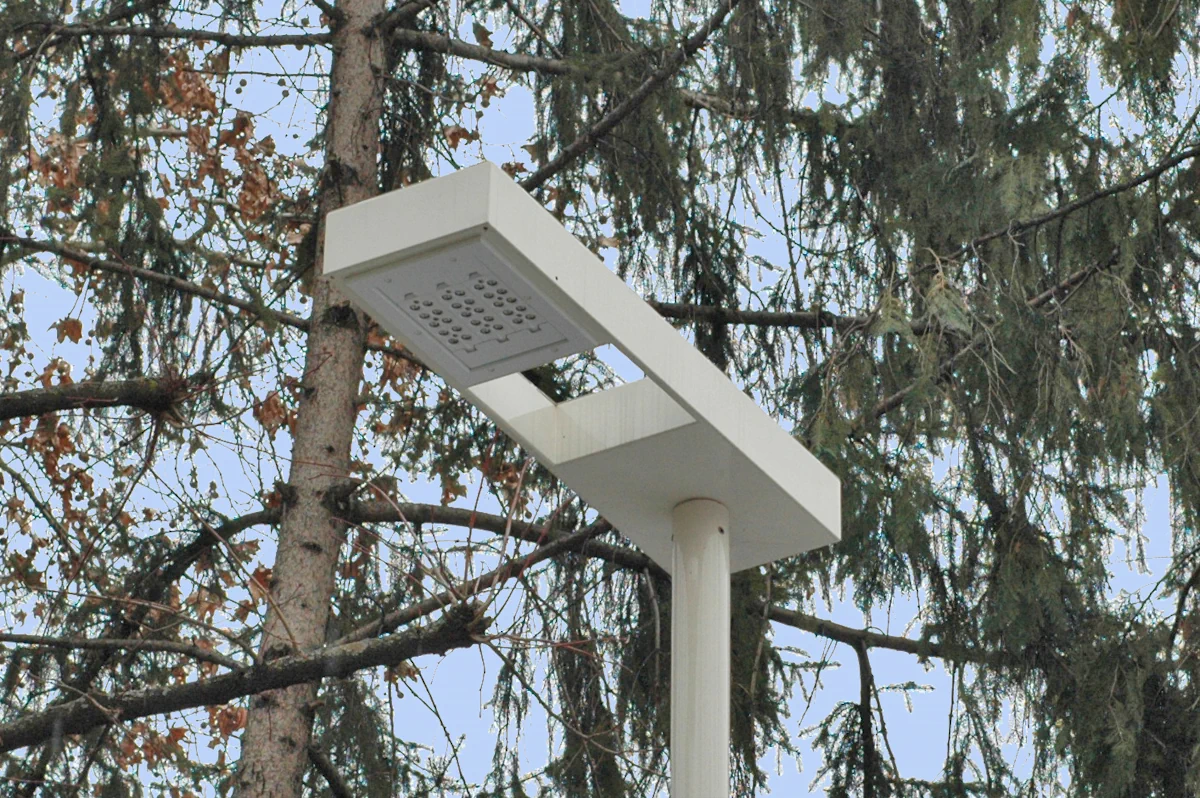
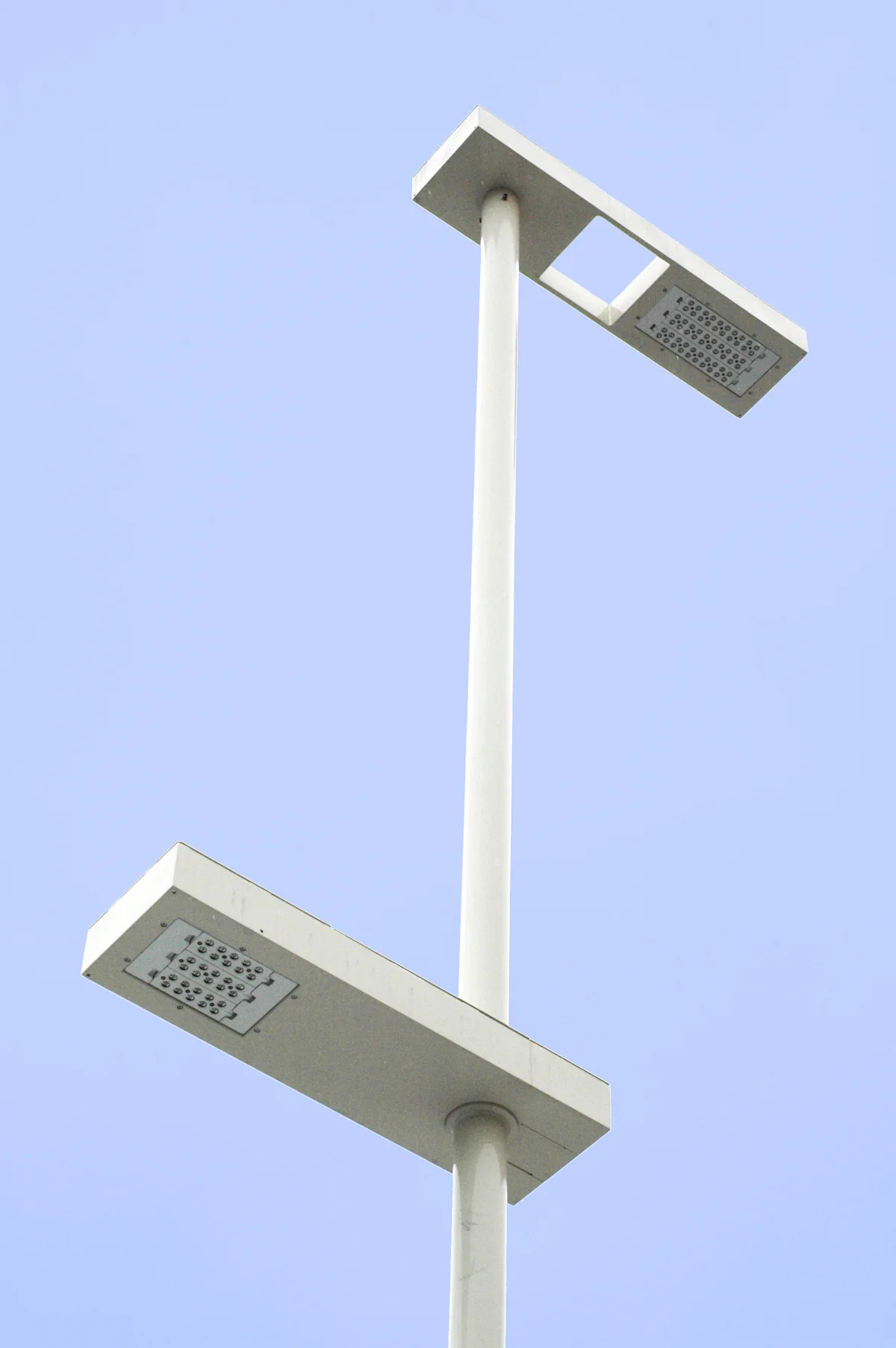
The most successful of them all – which we have installed in many of the city’s streets – is the Petitot Pole, which reinterprets the theme of the relationship between column and capital, constituting an analogical fragment that reinvents the court architect’s proposals for a Monumento a un condottiero (Monument to a condottiere) and Colonna per lo Stradone (Column for the street). The system envisages the bracing divided into two parts: the outer part that is distanced to house the luminaires (at that time, the first LEDs were being experimented) and the circular tube coupling designed as housing for equipment. In fact, the electronic head is designed to transform a simple light pole into an intelligent system for the city in which various types of devices can be housed – sensors, video cameras, urban domotics elements, dimmers for brightness control – to equip settlements with the distributed set of control points necessary for practical implementation of the fourth industrial revolution from a Smart City perspective.
Tecnopali SPA
Parma, 2007-2009
Photography Giovanni de Sandre